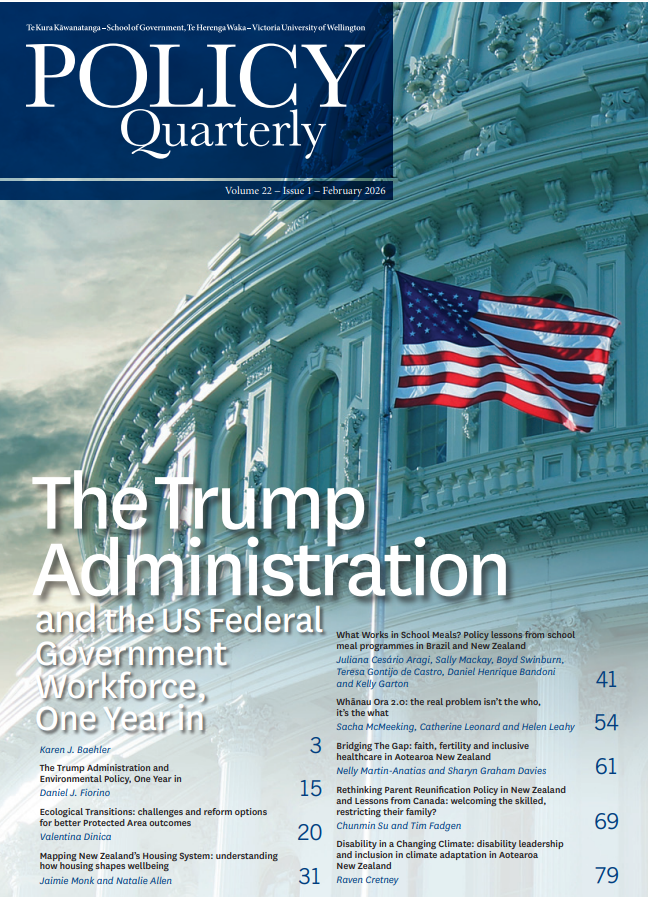
What Works in School Meals? Policy lessons from school meal programmes in Brazil and New Zealand
DOI:
https://doi.org/10.26686/pq.v22i1.10502Keywords:
school food, food policy, education, food systems, equity, public healthAbstract
The Ka Ora, Ka Ako Healthy School Lunches programme has been operating for six years, feeding one quarter of New Zealand’s students, with demonstrated early success; however, its future is not guaranteed. Brazil’s National School Feeding Programme represents one of the largest and longest-standing food provision initiatives in the world, currently feeding all students enrolled in public schools, and has seen massive success in lifting children out of malnutrition; national food insecurity rates are now lower than New Zealand’s. This study applied a policy analysis framework to compare the two programmes in terms of their content, actors, process and implementation context to distil key insights for New Zealand regarding building programme sustainability and legitimacy. We discuss how these two programmes evolved from different societal and governmental values, highlight mutual lessons to be learned, and provide insights for other school meal programmes worldwide.
Downloads
Downloads
Published
Issue
Section
License
Permission: In the interest of promoting debate and wider dissemination, the IGPS encourages use of all or part of the articles appearing in PQ, where there is no element of commercial gain. Appropriate acknowledgement of both author and source should be made in all cases. Please direct requests for permission to reprint articles from this publication to Policy-Quarterly@vuw.ac.nz.