
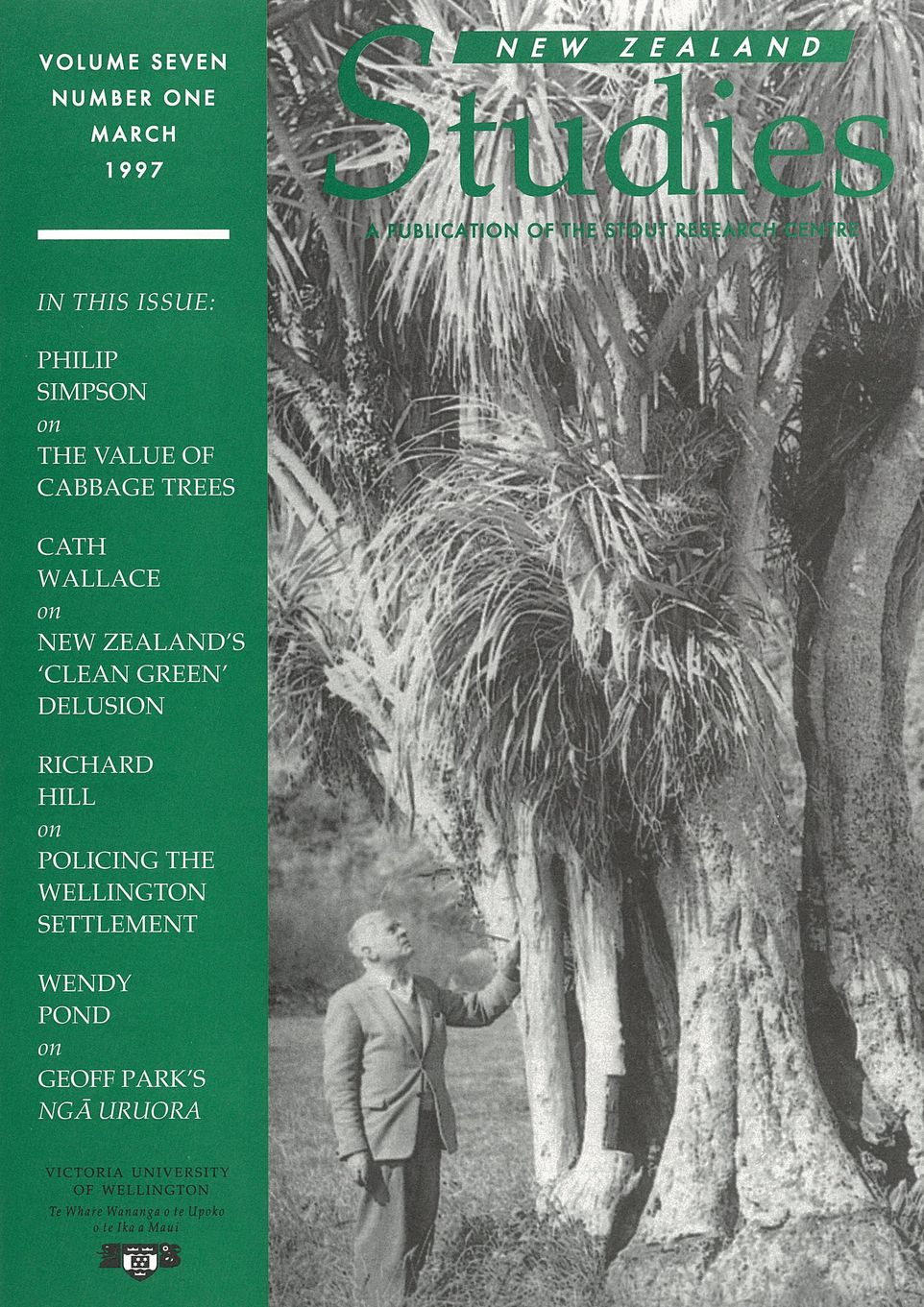
Are Cabbage Trees Worth Anything? Relating Ecological and Human Values in the Cabbage Tree, ti kouka.
DOI:
https://doi.org/10.26686/jnzs.v7i1.395Abstract
Cabbage trees entered 'New Zealand' along tropical archipelagos some 15 million years ago.' They have adapted to the vicissitudes of sea-level, mountain building and erosion, and climate change, and have evolved into different species and regional forms. A remarkable set of structural and physiological features has developed to equip them for survival in a changeable and sometimes extreme environment.
It was the qualities of strength and durability that were seized on by Maori, and they favoured some or selected new forms to satisfy their daily needs. The same qualities of survival underscore Pakeha respect for cabbage trees. They too have recognised variety and have bred new forms to satisfy their aesthetic mores. A sense of national identity has grown around the cabbage tree and people have been shocked by the epidemic disease 'Sudden Decline'. One of our best known natural symbols, of strength, uniqueness and humility (someone said 'a real kiwi') has fallen down. What are we doing to the world?
Downloads
Downloads
Published
Issue
Section
License
Authors who publish with this journal agree to the following terms:
The Journal of New Zealand Studies retains the copyright of material published in the journal, but permission to reproduce articles free of charge on other open access sites will not normally be withheld. Any such reproduction must be accompanied by an acknowledgement of initial publication in the Journal of New Zealand Studies.