An investigation into the potential of residential solar photovoltaic systems to ameliorate energy poverty in Aotearoa New Zealand
DOI:
https://doi.org/10.26686/ases.v2.11240Keywords:
Energy poverty, Residential solar photovoltaics, Energy cost reductions, Concessionary lendingAbstract
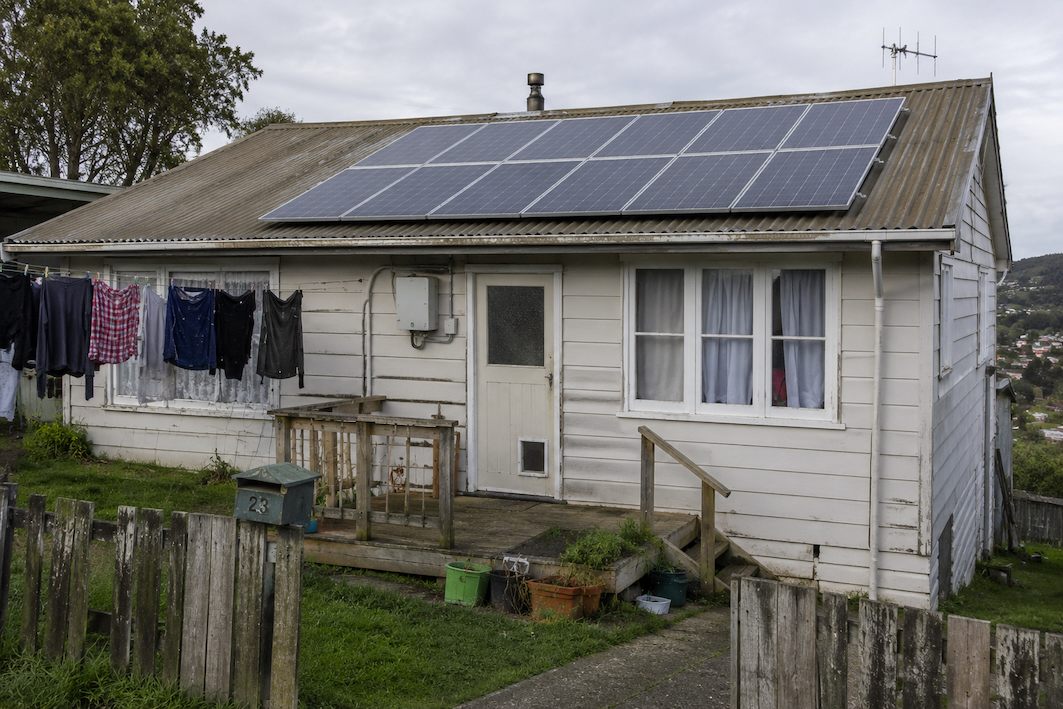
Energy poverty is commonly defined as the inability to affordably maintain healthy temperatures in the home. It affects hundreds of thousands of households in Aotearoa with combined public and private costs measured in the billions of dollars each year. The objective of this paper is to analyse the electricity consumption characteristics of those in energy poverty so that the potential for residential solar photovoltaic systems (solar PV) to ameliorate it can be assessed. Further research in this area is particularly relevant given the historically poor standard of the housing stock, the widespread use of inefficient space and hot water heating technologies, the relatively high cost of grid supplied electricity, and the relatively low uptake of residential solar PV systems. This paper examines the scope and scale of energy poverty in Aotearoa and the history and efficacy of common interventions to date. It examines household characteristics and electricity consumption patterns in households facing energy poverty. Such is the state of Aotearoa’s housing stock, particularly that inhabited by those in energy poverty, that there is no significant correlation between electricity consumption, building area or number of bedrooms. However, an analysis of eight properties shows that debt funded solar PV systems can make an immediate, and increasing, contribution to the alleviation of energy poverty in some cases. In others, it may be wiser to undertake alternative energy interventions. It is recommended that programmes be established to undertake house-by-house assessments, to broaden the scope of interventions to include solar PV, hot water heat pumps and hot water timers alongside concessionary loans, such as through Local Government New Zealand’s proposed Ratepayer Assistance Scheme, to enable their accelerated deployment. It is also recommended that social housing and energy services providers explore the opportunity to maximise the benefit of solar PV across their portfolios.Downloads
Download data is not yet available.
Downloads
Additional Files
Published
2026-09-02
How to Cite
Judge, C. P. B., & Brent, A. C. (2026). An investigation into the potential of residential solar photovoltaic systems to ameliorate energy poverty in Aotearoa New Zealand. Archives of Sustainable Energy Systems, 2. https://doi.org/10.26686/ases.v2.11240
Issue
Section
Articles
License
Copyright (c) 2026 Christian Paul Banfil Judge, Alan Colin Brent

This work is licensed under a Creative Commons Attribution 4.0 International License.
The articles in the journal are published under the terms of the Creative Commons Attribution 4.0 International License (CC BY 4.0), which permits use, sharing, adaptation, distribution, and reproduction in any medium or format, provided the original author(s) and source are properly cited.