Financial viability of distribution-connected utility-scale solar PV in Aotearoa New Zealand: A multi-scenario analysis
DOI:
https://doi.org/10.26686/ases.v2.11234Keywords:
Solar PV, Nodal pricing, Power purchase agreement, Financial viability, Wholesale electricity marketAbstract
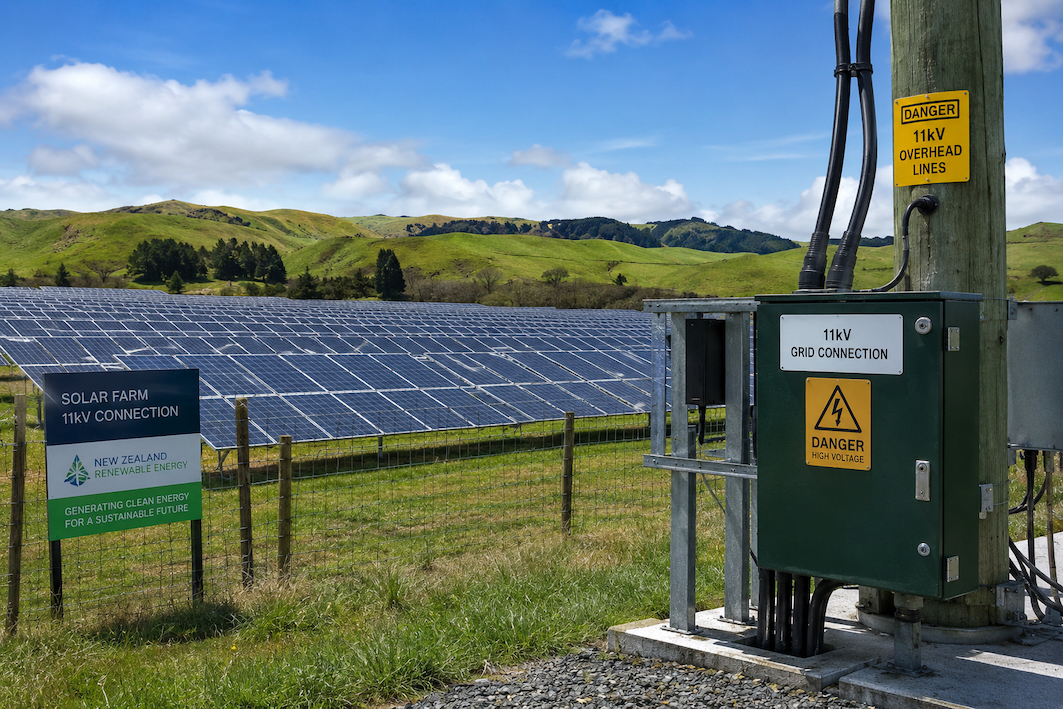
Aotearoa New Zealand generates over 85% of its electricity from renewable sources, built on hydro and geothermal foundations whose expansion capacity is now structurally constrained. With domestic natural gas supply in accelerating decline and solar photovoltaic (PV) capacity growing 51% in 2024 alone, utility-scale solar is emerging as a central technology for new generation. Yet no study to date has integrated site-specific generation modelling, generation-weighted nodal price analysis, and multi-scenario discounted cash flow analysis for distribution-connected solar PV at this scale within the domestic wholesale market context, leaving investors without a replicable, granular framework for project-level appraisal. This study addresses that gap by assessing the financial viability of a 5 MW utility-scale solar PV project connected to the Powerco distribution network across three candidate nodes — Masterton, Bunnythorpe, and Hawera — with fixed-tilt and single-axis tracking configurations. A three-stage methodology integrates site-specific energy generation modelling using the System Advisor Model (SAM), generation-weighted nodal price analysis based on half-hourly wholesale market data from the Electricity Market Information platform across three reference years (2021, 2023, and 2025), and a multi-scenario discounted cash flow analysis. All six site–configuration combinations generate positive net present values (NPVs) and internal rates of return (IRRs) exceeding the 7% weighted average cost of capital (WACC) threshold. Hawera emerges as the strongest site (IRR: 10.45%–11.06%; NPV: $3.43M–$4.35M), Masterton as an intermediate option, and Bunnythorpe as the most marginal, with the highest sensitivity to adverse wholesale price and generation outcomes. Single-axis tracking delivers superior financial returns at all three nodes. However, its advantage narrows substantially at sites with high diffuse irradiance fractions. Breakeven power purchase agreement (PPA) prices range from $106.49/MWh to $126.50/MWh — well below prevailing generation-weighted wholesale levels — indicating meaningful contracting margin across all configurations. The results provide a site-specific, replicable framework for investment appraisal in Aotearoa New Zealand's distribution network, with direct implications for technology selection, revenue strategy, and the assessment of solar cannibalization risk as the sector scales rapidly.Downloads
Download data is not yet available.
Downloads
Additional Files
Published
2026-09-02
How to Cite
Monasterio, A., & Brent, A. C. (2026). Financial viability of distribution-connected utility-scale solar PV in Aotearoa New Zealand: A multi-scenario analysis. Archives of Sustainable Energy Systems, 2. https://doi.org/10.26686/ases.v2.11234
Issue
Section
Articles
License
Copyright (c) 2026 Aiken Monasterio, Alan Colin Brent

This work is licensed under a Creative Commons Attribution 4.0 International License.
The articles in the journal are published under the terms of the Creative Commons Attribution 4.0 International License (CC BY 4.0), which permits use, sharing, adaptation, distribution, and reproduction in any medium or format, provided the original author(s) and source are properly cited.