Design and implementation of a distributed energy management system for solar PV and flexible loads using a building automation platform: A residential site case study in Hamilton, Aotearoa New Zealand
DOI:
https://doi.org/10.26686/ases.v2.11236Keywords:
Demand flexibility, Building automation, Distributed energy management, Solar photovoltaic, Hot-water controlAbstract
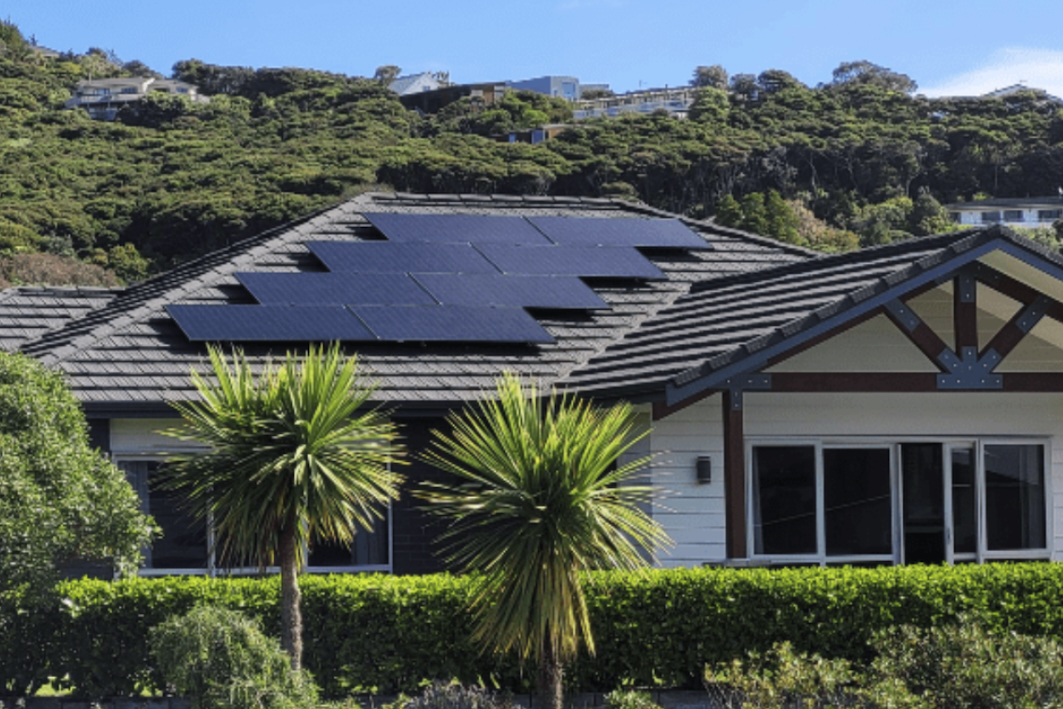
Aotearoa New Zealand’s electrification pathway increases the value of building-scale flexibility, but practical deployment depends as much on supervisory integration of onsite distributed energy resources and controllable loads, as on optimisation. Rooftop solar provides greater value when generation is used onsite rather than exported, particularly in buildings with flexible electrical loads. Using a single embedded case study design, this paper examines the design, implementation, and initial field evidence of a building automation-based distributed energy management system at a residential site in Hamilton. The analysis shows that intuitive supervisory control of distributed energy resources and controllable loads increases PV self-consumption from 12.7% under non controlled conditions to 31.3% under controlled operation, while the export share of PV generation decreases by 18.6%. Further analysis indicates that stricter control of flexible loads, such as the hot water cylinder (HWC), on a high-surplus day would reduce grid imports by 41.5%, increase site self-sufficiency from 50.6% to 71.1% in the absence of battery storage, and increase the hot-water solar fraction, defined as the share of hot-water demand met by PV, from 43.4% to 89.5%. Overall, the findings demonstrate that building-scale supervisory control of distributed energy resources can be implemented using a building automation platform and can materially increase onsite PV utilisation while reducing grid imports through coordinated control of flexible electrical loads.Downloads
Download data is not yet available.
Downloads
Additional Files
Published
2026-09-02
How to Cite
Muravu, A., & Brent, A. (2026). Design and implementation of a distributed energy management system for solar PV and flexible loads using a building automation platform: A residential site case study in Hamilton, Aotearoa New Zealand. Archives of Sustainable Energy Systems, 2. https://doi.org/10.26686/ases.v2.11236
Issue
Section
Articles
License
Copyright (c) 2026 Admire Muravu, Daniel Burmester

This work is licensed under a Creative Commons Attribution 4.0 International License.
The articles in the journal are published under the terms of the Creative Commons Attribution 4.0 International License (CC BY 4.0), which permits use, sharing, adaptation, distribution, and reproduction in any medium or format, provided the original author(s) and source are properly cited.